
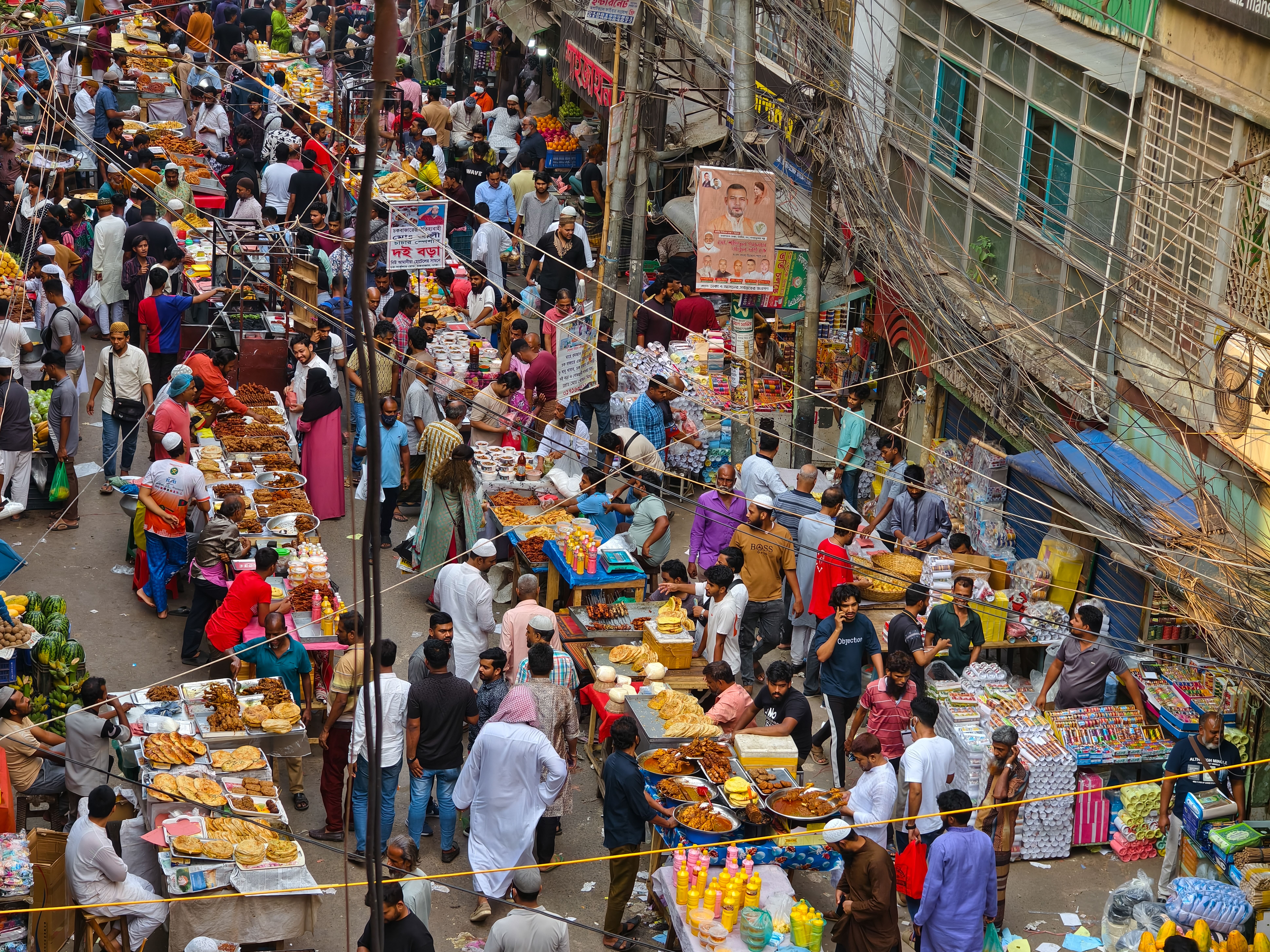
A chaat vendor prepares components all day and assembles nothing until an order is placed. The reason is that the dish exists in a window measured in seconds rather than minutes.
The contrast is the dish
Chaat is built on a crisp base meeting wet chutneys, yogurt and soft fillings. Remove the crispness and what remains is a bowl of sauces with soggy fragments in it.
Fried elements hold their texture only while dry, because the structure is a rigid network of starch and protein surrounding air pockets.
Moisture entering those pockets softens the network almost immediately, and the change is not reversible at serving temperature.
How the components are staged
Everything except the assembly is done in advance. Chutneys are ground, potatoes boiled and crushed, chickpeas cooked, yogurt whisked, fried shells stored dry in tall containers.
Each of those keeps for hours at ambient conditions, and none of them is doing anything time-sensitive while it waits.
Assembly is then a sequence of scoops taking well under a minute, which is what allows one person to serve a queue.
Why the layering order is fixed
Vendors build in a consistent order, and it is not decorative. Dry and crisp goes first, wet goes on top, and the crispest element is added last of all.
That keeps the most vulnerable component out of contact with liquid for the longest possible time, which is often only the walk to a nearby step.
Anything sprinkled rather than spooned goes at the very end, since powdered spice mixes clump the moment they meet moisture.
Why it resists packaging
The same physics that requires assembly to order makes chaat difficult to deliver. A sealed container traps steam, and steam softens the crisp element from every direction.
Vendors work around it by packing the crisp components separately and letting the customer combine them, which shifts the assembly rather than solving it.
This is a large part of why chaat remained a stall-and-counter food even as other street dishes moved into delivery.
What the sour and hot elements are doing
Tamarind, lime, chilli, black salt and roasted cumin appear in almost every version. Together they push the dish sharply sour and pungent rather than merely savoury.
That intensity is what balances the starchy base, which on its own would be bland and heavy in the quantity served.
It also means chaat is eaten fast, since the flavours are pitched for a few vigorous mouthfuls rather than a sustained sitting.