
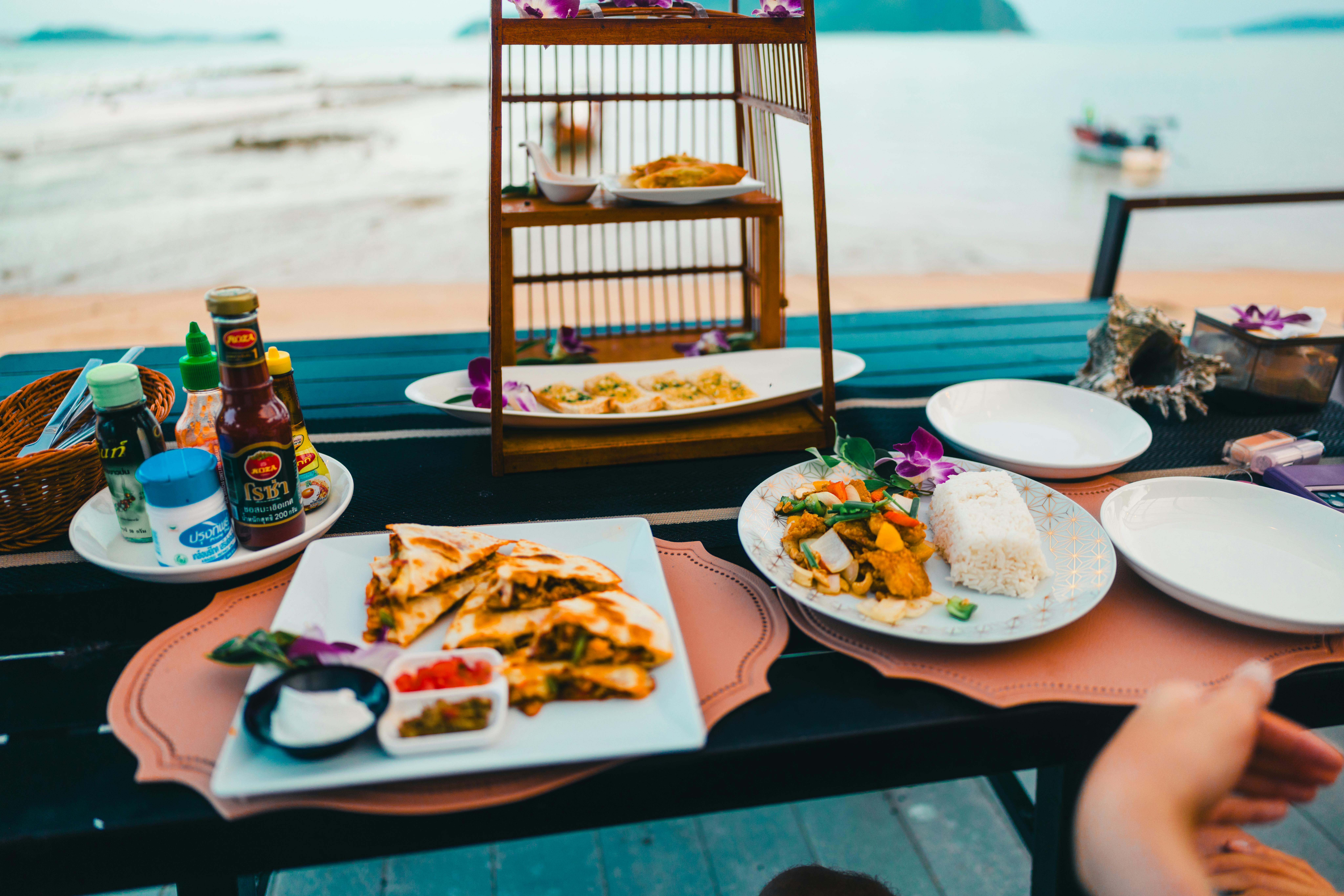
Caribbean roti, curry and dhal descend directly from Indian cooking and taste distinctly unlike it. The changes came from what was available and what could be reproduced far from home.
The migration set the starting point
Indentured laborers arrived in the nineteenth century from specific regions of India, so the cooking that traveled was a narrow slice rather than the whole range of the subcontinent.
That slice was largely rural and vegetarian-leaning, built on pulses, flatbreads and simple spiced vegetables rather than on the elaborate court cooking that shaped restaurant menus elsewhere.
Everything that developed afterward grew from that base, which is why Caribbean Indian food resembles village cooking more than it does the food of Indian restaurants abroad.
Spice access narrowed sharply
Whole spices were hard to obtain consistently, and the response was a ground blend prepared in quantity and used across many dishes.
A single blend applied broadly flattens the distinctions between dishes that would otherwise use different combinations, which is one reason the cuisine reads as more unified than its parent.
Roasting the blend before grinding became standard, adding a toasted depth that is a defining characteristic rather than an optional step.
Local produce replaced what would not grow
Caribbean chiles brought a fruitier, sharper heat than the dried red chiles of India, and they became the default rather than a substitute.
Root vegetables, pumpkin, callaloo and local greens entered dishes that would have used other vegetables, and seafood took a much larger role than in the inland regions people came from.
Cooking fats shifted too, following what was pressed and sold locally rather than what tradition specified.
The bread changed most visibly
Flatbreads developed into layered, flaky forms cooked on a large griddle, some of them shredded after cooking into loose flakes served alongside a curry.
Others became wrappers, folded around a filling and eaten in hand, which is a format with no close counterpart in the regions the cooking came from.
Split-pea fillings ground into the dough are another local development, turning a plain bread into something seasoned in itself rather than a neutral vehicle for a curry.
It is now a separate cuisine
Caribbean roti shops in North American cities serve a menu that an Indian cook would recognize in outline and not in detail, which is the mark of a genuine divergence.
The vocabulary persists even where the dishes do not, since names traveled intact while their contents changed over generations of local cooking.
Treating it as a variant of Indian food misses how much has been rebuilt, and the more useful comparison is with any cuisine shaped by migration and constrained supply.